
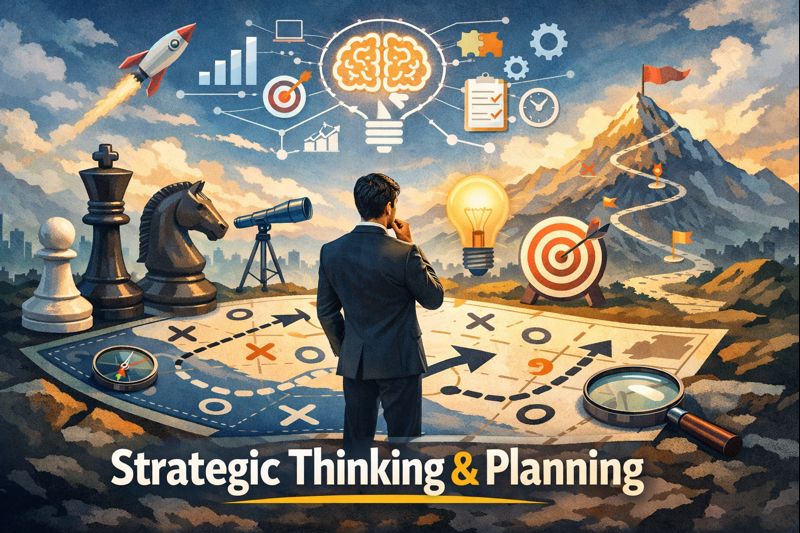

In a world that rewards speed and quick reactions, it’s tempting to spend all your energy putting out fires. But the most effective leaders know something crucial: being busy isn’t the same as being strategic. The businesses and individuals who thrive over the long term are those who learn to think strategically and plan intentionally.
Strategic thinking isn’t a talent reserved for executives in corner offices. It’s a skill anyone can develop—and one that will transform how you approach challenges, allocate resources, and pursue your goals.
What Is Strategic Thinking?
At its core, strategic thinking is the ability to see the big picture while navigating the details. It’s about asking the right questions before jumping to solutions. It’s the discipline of pausing to consider where you’re going, why it matters, and what it will take to get there.
Strategic thinkers don’t just react to circumstances—they anticipate them. They look beyond immediate pressures to identify patterns, opportunities, and threats that others miss. And they make decisions today that position them for success tomorrow.
The Difference Between Strategy and Tactics
One of the most common mistakes in business is confusing strategy with tactics. Here’s a simple distinction:
- Strategy is the overarching plan that defines your direction and priorities. It answers the question: What are we trying to achieve, and why?
- Tactics are the specific actions you take to execute that plan. They answer the question: How will we get there?
Without strategy, tactics become aimless activity. You might be working hard, but you’re not necessarily moving forward. Strategy provides the compass; tactics provide the steps.
The Building Blocks of Strategic Planning
Whether you’re planning for a startup, a department, or your own career, effective strategic planning involves several key components:
1. Clarify Your Vision and Mission
Before you can plan where you’re going, you need to know what success looks like. Your vision is the aspirational picture of your future—the destination you’re working toward. Your mission defines why you exist and what value you bring.
These aren’t just corporate buzzwords. A clear vision and mission act as a filter for every decision you make. When opportunities arise, you can ask: Does this align with who we are and where we’re headed?
2. Assess Your Current Reality
Honest assessment is the foundation of good strategy. This means taking stock of your strengths, weaknesses, opportunities, and threats (often called a SWOT analysis). It also means understanding the competitive landscape, market trends, and the resources at your disposal.
The goal isn’t to be discouraged by limitations—it’s to make informed decisions. You can’t chart a course if you don’t know your starting point.
3. Define Clear Objectives
Vague goals produce vague results. Strategic objectives should be specific, measurable, and time-bound. Instead of “grow the business,” aim for “increase revenue by 20% within the next 12 months.” Instead of “improve customer satisfaction,” target “achieve a Net Promoter Score of 50 by Q4.”
Clear objectives give your team something concrete to work toward and make it possible to track progress along the way.
4. Identify Strategic Priorities
You can’t do everything at once, and trying to do so is a recipe for mediocrity. Strategic planning requires the discipline to choose—to identify the handful of priorities that will have the greatest impact and focus your energy there.
This is where many plans fail. Leaders create lengthy lists of initiatives without making the hard trade-offs. True strategy is as much about what you decide not to do as what you decide to pursue.
5. Develop an Action Plan
Strategy without execution is just wishful thinking. Once you’ve identified your priorities, break them down into actionable steps. Assign ownership. Set deadlines. Establish milestones. Create accountability structures.
An action plan bridges the gap between aspiration and reality. It turns your strategy into a living roadmap that guides daily decisions.
6. Build in Flexibility
No plan survives contact with reality unchanged. Markets shift, competitors move, and unexpected challenges arise. The best strategic plans are living documents—reviewed regularly, adjusted as needed, and responsive to new information.
Strategic thinking isn’t a one-time exercise. It’s an ongoing discipline of learning, adapting, and refining your approach.
Cultivating a Strategic Mindset
Beyond formal planning processes, strategic thinking is a way of approaching the world. Here are habits that sharpen your strategic instincts:
Ask “why” before “how.” Before diving into solutions, make sure you understand the problem. What’s the root cause? What are we really trying to accomplish? The best answer to the wrong question is still the wrong answer.
Think in systems. Everything is connected. Strategic thinkers consider how decisions in one area ripple through others. They look for leverage points—small changes that can produce outsized results.
Embrace long-term thinking. It’s easy to get trapped in the tyranny of the urgent. Carve out time to think about the future. Where do you want to be in three years? Five years? Ten? Let those answers inform your choices today.
Seek diverse perspectives. Your blind spots are invisible to you. Surround yourself with people who think differently, challenge your assumptions, and expand your view of what’s possible.
Learn from others. Study leaders and organizations that have navigated challenges similar to yours. Read widely. History, biography, and case studies are rich sources of strategic insight.
Reflect regularly. Build time into your schedule to step back and evaluate. What’s working? What isn’t? What have you learned? Reflection turns experience into wisdom.
The Courage to Choose
Perhaps the hardest part of strategic thinking is the courage it requires. Strategy demands that you make choices—and every choice involves risk. Saying yes to one path means saying no to others. Committing resources to a priority means they’re unavailable for something else.
But indecision is itself a decision—and usually a costly one. Leaders who wait for perfect information or try to keep every option open often find themselves outpaced by competitors who were willing to commit.
Strategic thinking isn’t about eliminating uncertainty. It’s about making the best decisions you can with the information available, then learning and adjusting as you go.
Bringing It All Together
Strategic thinking and planning aren’t luxuries for when you have extra time. They’re essential disciplines that determine whether your hard work translates into meaningful progress.
Start where you are. Take an honest look at your situation. Get clear on what you’re trying to achieve and why it matters. Identify the critical few priorities that will make the biggest difference. Build a plan, take action, and stay nimble enough to adapt.
The leaders who shape the future aren’t just working harder than everyone else. They’re thinking more clearly, planning more intentionally, and executing with focus.
That’s the power of strategy. And it’s available to anyone willing to cultivate it.
What strategic challenge are you facing right now? Sometimes the best first step is simply carving out time to think—away from the noise, away from the inbox, away from the urgent. Give yourself permission to be strategic. The results will follow.

0 Comments